How to Restore a Rusty Wrought Iron Railing or Fence (Without Replacing It)
This guide contains affiliate links. As an Amazon Associate I earn from qualifying purchases. Disclosure.
Most "wrought iron" railings, gates and fences around houses today are actually mild steel or cast iron, but they fail the same way: paint cracks at joints and the bottoms of posts, water gets in, and rust spreads under the paint. The good news is that most of them can be saved for a fraction of the cost of replacement if you catch it before the metal is rusted through. This is the order I'd work in.
1. Check whether it's worth saving
- Poke the worst spots with a screwdriver, especially where posts enter concrete, the bottom rail, and welded joints. Surface rust and flaking scale are fixable. Metal that crumbles or that the screwdriver goes through needs a welder to cut out and patch, or that section replaced.
- Check that it's solid. A railing is a safety item. If posts wobble, anchors are rusted out or welds have cracked, get those repaired before you think about paint.
- Test old paint for lead if it might be from before 1978. Railings on older homes very often have lead paint, and scraping, sanding or wire-wheeling it spreads hazardous dust.
2. Clean it
Wash off dirt, cobwebs and chalky old paint with water and a degreasing cleaner, rinse, and let it dry completely. Paint and rust treatments don't stick to grime.
3. Remove loose rust and failing paint
- Hand tools first: a scraper and a stiff wire brush take off loose paint and flaking rust, and they're the best way to get into scrollwork and tight corners.
- Power for flat bars and rails: a wire wheel or wire cup brush on a drill or angle grinder is much faster. Wear safety glasses or a face shield, gloves and long sleeves, because wire bristles break off and fly.
- Sandpaper or a flap disc feathers the edges of sound paint so new paint doesn't show a ridge.
- The goal isn't bright metal everywhere. It's removing everything loose, so whatever paint or rust is left is tightly bonded.
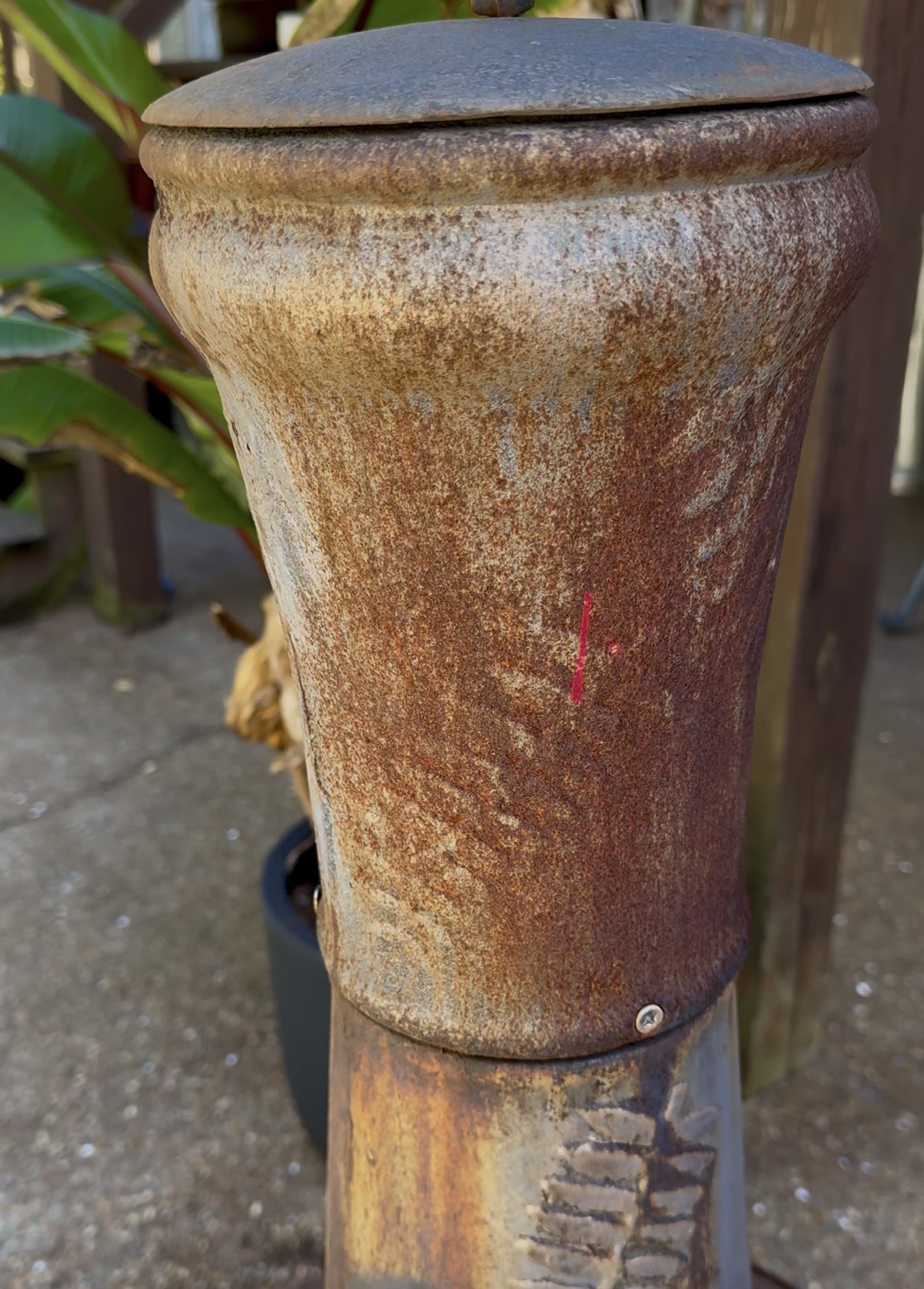
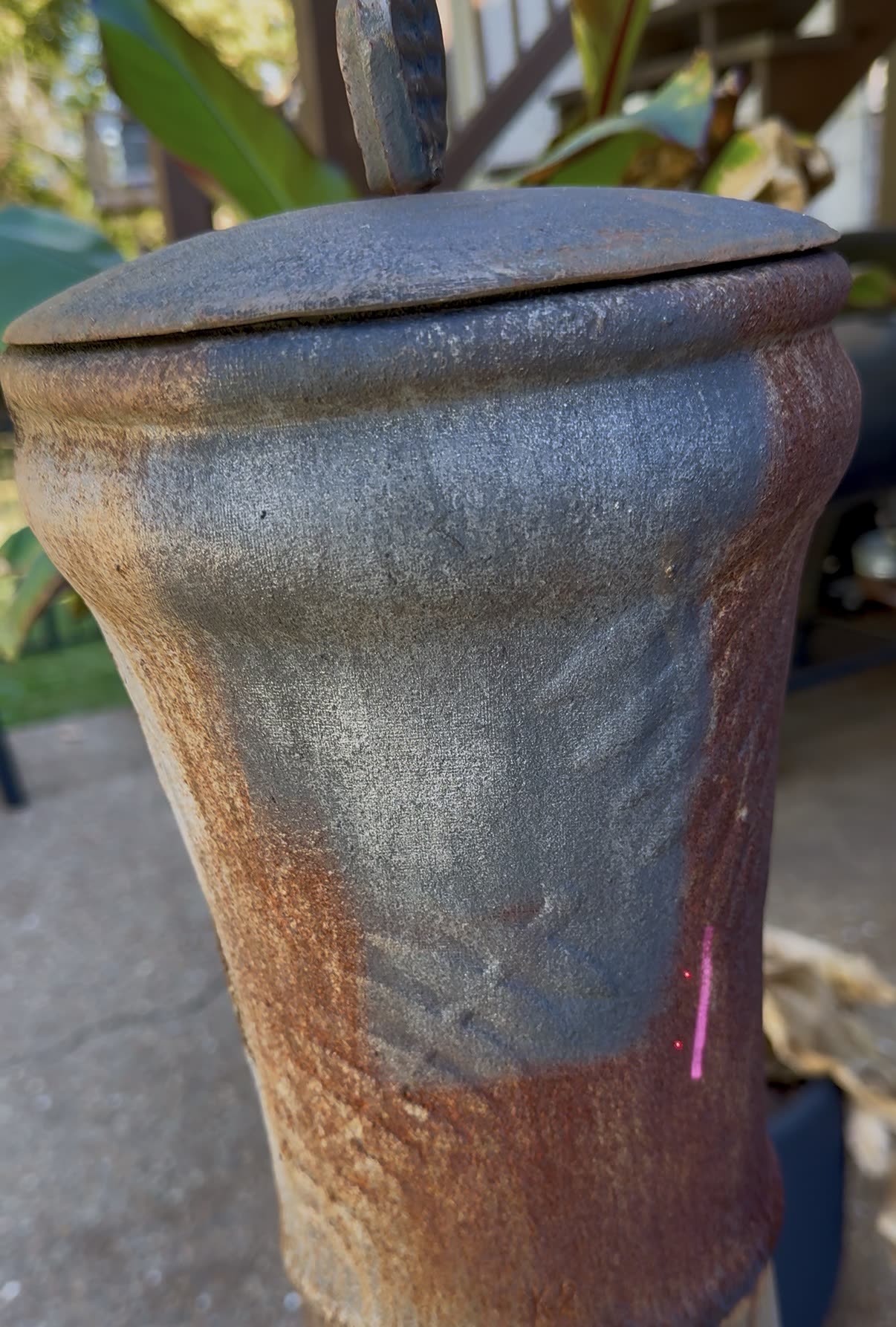
For a badly rusted gate or panel you can take off its hinges, media blasting or laser cleaning gets every crevice clean in a fraction of the time, and it's how professionals handle heavily rusted ornamental iron. I compare those methods in laser vs. sandblasting vs. chemical stripping, and if you're blasting it yourself, see choosing blast media.
4. Treat the rust that's left
On scrollwork and pitted areas you can't fully clean, a rust converter turns remaining rust into a stable, paintable black layer. Follow the label on dry time and temperature, and don't put it on bare clean steel or over loose rust. Which type to choose is covered in rust converters compared. On bare metal you've cleaned to shiny, skip the converter and prime it the same day, because clean steel flash-rusts quickly outdoors.
5. Prime, then paint
- Use a rust-inhibiting metal primer on bare spots and converted rust. Two thin coats beat one heavy coat.
- Top-coat with an exterior enamel made for metal. Satin or gloss black is the traditional look and hides touch-ups well. Some direct-to-metal paints combine primer and paint; follow their label on how much prep they need.
- Brush or spray? Spray cans are faster on spindles and scrollwork. A brush works paint into joints and pits better. Many people spray first and brush the joints.
- Paint in the right weather: dry, mild days within the temperature range on the can, after the dew has burned off, with no rain expected before it dries.
- Pay extra attention to the bottoms of posts and the top of the bottom rail, where water sits. Seal the gap where a post meets concrete with an exterior sealant so water can't pool there.
More detail on getting paint to last is in prepping metal before painting.
6. Keep it from coming back
Walk the railing once a year, ideally in spring. Wire-brush and touch up any chip or rust bloom while it's small; a five-minute touch-up now saves a full strip later. Keep sprinklers from spraying it every day, and keep mulch and soil from piling against the posts.
DIY or hire it out?
A short porch railing in decent shape is a good weekend project with a wire wheel, primer and paint. Long fences, ornate scrollwork with heavy rust, lead paint, or anything that needs welding is where a pro usually makes sense. My DIY vs. pro cost guide walks through the trade-offs, and around Nashville my business, Music City Laser Cleaning, does laser cleaning and media blasting on railings and gates.
Products for this job
- Wire cup brush set for a drill Fast removal of loose rust and paint on flat bars and rails. Check price on Amazon
- Stiff hand wire brush and scraper set For scrollwork and corners a power brush cannot reach. Check price on Amazon
- Rust converter Stabilizes rust left in pits and scrollwork so it can be painted. Check price on Amazon
- Rust-inhibiting metal primer Goes on bare spots and converted rust before the top coat. Check price on Amazon
- Exterior enamel for metal, satin black Durable top coat for outdoor iron. Check price on Amazon
- Lead paint test kit Check old railing paint before you scrape or sand it. Check price on Amazon
- Full face shield Wire wheel bristles fly. Wear one over safety glasses. Check price on Amazon
FAQ
Can I paint over rust on an iron railing?
Only after removing anything loose. Paint over flaking rust fails quickly. Wire-brush to tightly bonded rust or bare metal, use a rust converter on what's left if needed, then prime and paint.
What's the best paint for an outdoor iron railing?
A rust-inhibiting metal primer under an exterior enamel made for metal holds up well. Direct-to-metal paints can work too if you follow their prep instructions.
How often should a wrought iron fence be repainted?
It depends on the climate and how well it was prepped, but yearly touch-ups of chips and rust spots usually stretch full repaints out by many years.
Is my railing too far gone to save?
If a screwdriver goes through the metal or posts are rusted through at the base, that section needs welding repair or replacement. Surface rust and peeling paint are almost always fixable.